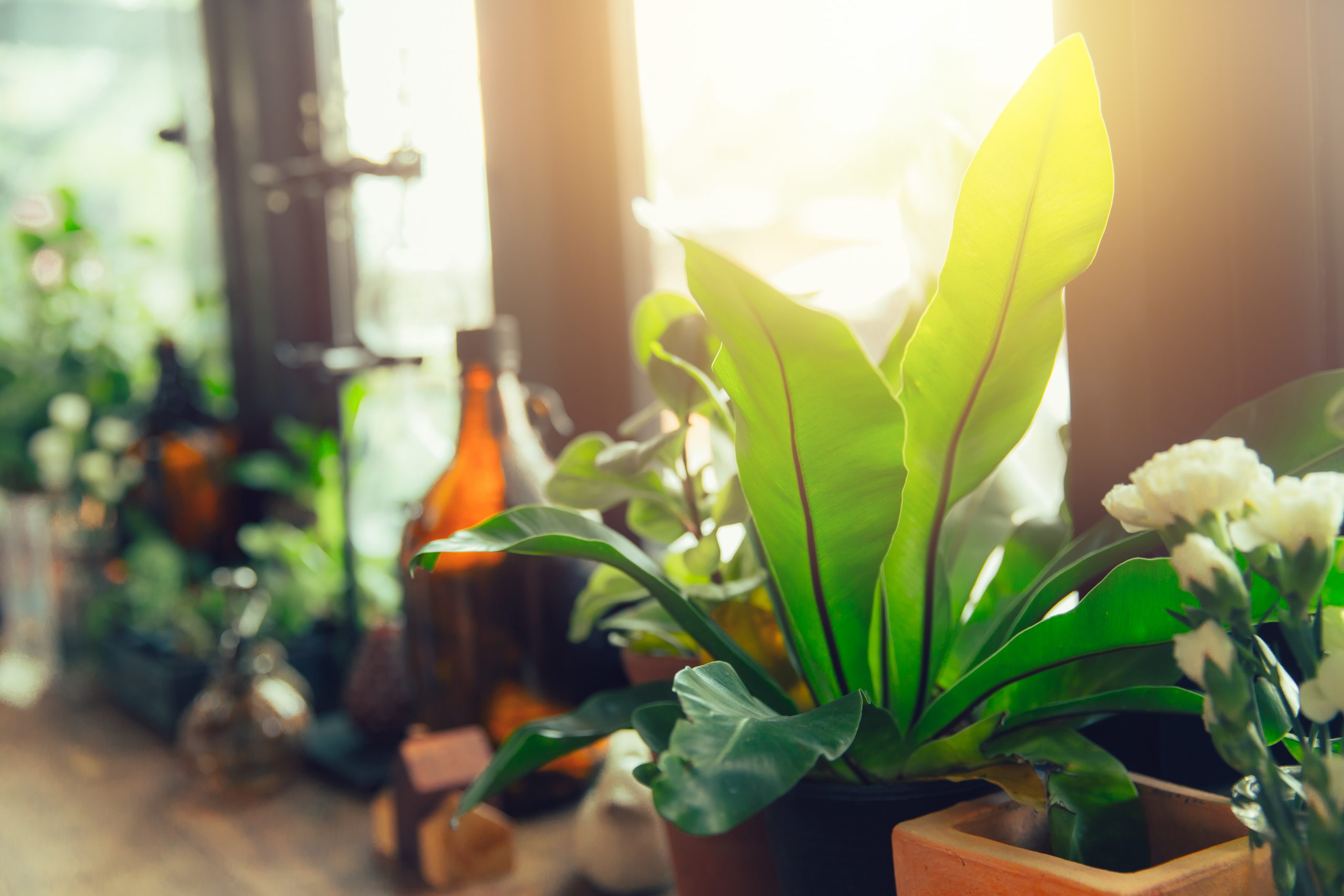
Shorter days. Cooler temperatures. Dry indoor heat. Winter brings a unique set of challenges for indoor plants — but with a few simple adjustments, your plants can thrive through the colder months. Whether you’re caring for plants at home or managing plants in a commercial space, winter indoor plant care doesn’t have to be complicated.
At Good Earth Plant Company, we’ve helped clients maintain thriving indoor environments for nearly fifty years. Here’s our updated, expert-backed guide to keeping your plants healthy all winter long.
Why Indoor Plants Struggle More in Winter
If your indoor plants always seem to decline when temperatures drop, you’re not alone. Plants naturally slow down their growth in winter, which means their needs change — sometimes dramatically.
Common winter plant stressors include:
- Shorter daylight hours
- Weak, low-angle window light
- Dry air from heaters
- Cold drafts
- Overwatering
- Slower plant metabolism
Most of these issues can be solved with thoughtful seasonal adjustments. A few small changes now can carry your plants successfully into spring.
Adjusting Light Levels for Winter Plant Growth

Light is the number one factor that changes indoors during winter. Even “bright” windows receive less intense light, and the sun sits lower in the sky.
Move Plants to Brighter Locations
South-facing windows (in the Northern Hemisphere) provide the brightest natural light. If you notice leggy stems or plants leaning toward the window, they’re asking for more light.
- Clean dust from leaves
- Keep plants 6–12 inches from the window
- Rotate plants weekly for even growth
When Grow Lights Make Sense
Grow lights are especially helpful for:
- Offices with limited natural light
- North-facing spaces
- Plants that show slowed or weakened growth
- Winter months with extended cloud cover
Choose full-spectrum LED grow lights with a timer set for 8–12 hours a day. Place the light 12–18 inches above your plants.
The Right Winter Room Temperature for Indoor Plants
Most indoor plants are native to the tropics, so temperature fluctuations can be stressful — especially sudden cold drafts.
Ideal Range
Keep most indoor plants in the 65–75°F range during the day and no lower than 60°F at night.
Protect Plants From Drafts and Heaters
Avoid placing plants:
- Next to exterior doors
- Against cold window glass
- Directly above or beside heat vents
- On windowsills that get cold at night
Consistent temperatures help prevent shock, leaf drop, and stress.
How to Water Indoor Plants in Winter

Watering is the most common winter plant care mistake. Because plants grow more slowly, they need much less water than they do in spring and summer.
Water Less Frequently
Instead of watering on a schedule, use the *soil test:
- Press your finger an inch into the soil
- If it’s dry, water
- If it’s still moist, wait
Overwatering is one of the fastest ways to cause root rot in winter. Slow-draining soil + cold temperatures = trouble.
*Different plants like varying degrees of moisture. Make sure you understand your plants moisture preference when considering how much to water.
Use Room-Temperature Water
Cold water can shock roots. Always let tap water sit until it reaches room temperature before watering.
Managing Humidity During Winter Heating
Indoor heat dries the air dramatically — often dropping humidity levels below 30%. Many tropical plants prefer 40–60%+ humidity.
Here are simple ways to boost humidity without overcomplicating your routine:
- Group plants together to create a microclimate
- Use pebble trays under plants
- Run a small humidifier near humidity-loving plants
- Move plants to naturally humid rooms like bathrooms (if they get light)
Seasonal Cleaning: Dust, Dead Leaves, and Pest Prevention
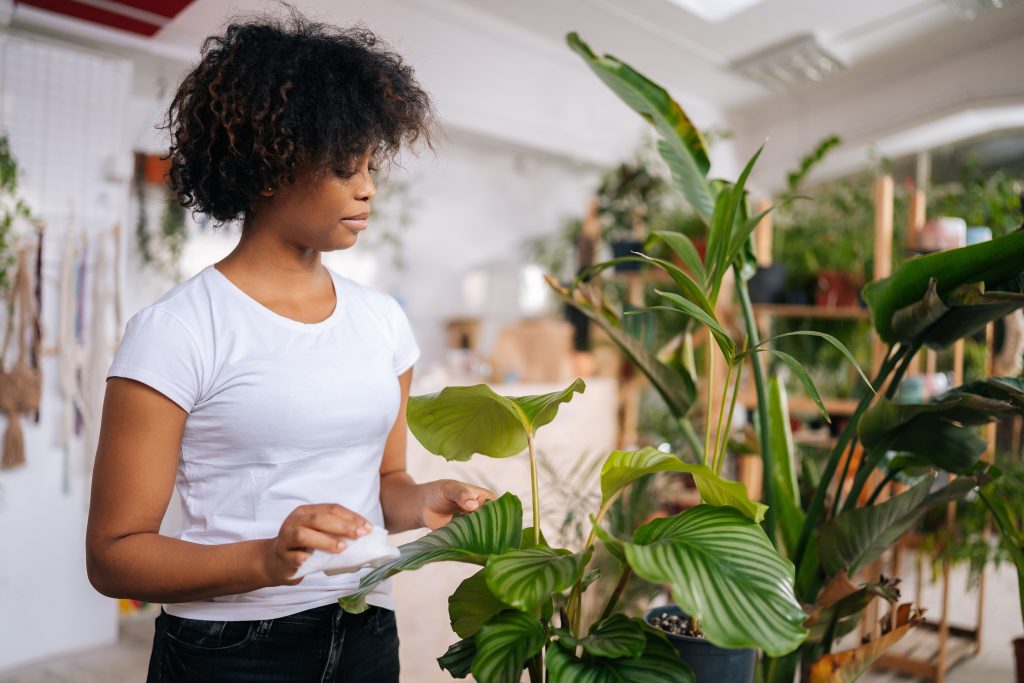
Wipe Leaves Regularly
Dust blocks light and reduces photosynthesis. Use a soft cloth to gently wipe leaves every few weeks.
Remove Dead or Yellowing Foliage
This helps prevent fungus and keeps pests from spreading.
Using Neem Oil Carefully
Neem oil can be helpful for dealing with pests, but use it sparingly in winter when plants are more sensitive. And don’t apply it in direct sunlight or right before placing plants near heaters.
Should You Bring Outdoor Plants Inside for Winter?
If temperatures in your area drop below 50°F at night, many plants will need shelter indoors.
You should bring in:
- Tropical outdoor plants
- Patio plants in containers
- Tender succulents
- Anything that shows cold damage (yellowing, dark spots, limp leaves)
Check for pests before bringing plants inside to avoid spreading them to your indoor collection.
FAQs About Winter Indoor Plant Care
Give them more light, water less often, maintain steady temperatures, and increase humidity.
Yes — it’s the best natural light source in winter.
Avoid direct heater air. Use consistent room warmth and, if needed, grow lights for supplemental light — not heat.
Keep them away from drafty windows and heaters. Use insulating pots if necessary.
Winter Plant Care With Good Earth Plant Company
Caring for indoor plants in winter doesn’t have to feel intimidating. With the right adjustments to light, water, temperature, and humidity, your plants can stay healthy year-round — even during the shortest days of winter.
If you need plant care support for your office, lobby, or commercial space, Good Earth Plant Company can help you create and maintain an indoor environment that feels alive all year long.
Get in touch with us anytime — we’re here to enrich your space with the beauty of nature.